Can You Install Pavers in Winter in Georgia? Complete Cold-Weather Hardscape & Pricing Guide
Written by the AGS Stones Hardscape Team
Hardscape installers based in Duluth, GA
Key Takeaways
- Yes, pavers can be installed all winter in Georgia because our frost line rarely exceeds 4 to 6 inches, and dry aggregate base compaction is completely unaffected by cold air.
- Unlike poured concrete slabs that require 50°F+ temperatures to cure without weakness or scaling, interlocking pavers are factory-cured at high heat and ready for immediate use.
- Winter installations protect your landscape: Bermuda and Zoysia lawns are dormant, minimizing turf damage from excavators and skid steers.
- Homeowners enjoy faster scheduling, shorter contractor waitlists, and quicker HOA Architectural Review Committee (ARC) turnaround times before the chaotic spring rush.
- Polymeric sand jointing requires dry pavers and air temperatures at or above 32°F to 40°F (easily achieved during crisp Atlanta sunny afternoons).
As autumn winds roll into North Georgia and temperatures begin to dip, many homeowners assume that outdoor construction must pause until April. "Should we wait until spring to build our patio?" is one of the most common questions our team receives across Alpharetta, Johns Creek, Roswell, and Duluth.
Here is the industry secret: winter is often the single best time of year to build a hardscape project in Metro Atlanta. From protecting your dormant turf to skipping contractor backlogs and avoiding spring material price hikes, tackling your paver patio, fire pit, or retaining wall between November and February provides massive advantages.
In this homeowner guide, we explain the engineering behind cold-weather paving, compare pavers versus poured concrete in Georgia freezing weather, and detail why smart homeowners book their projects before the spring surge.
1. The Georgia Climate Advantage: Mild Winters & Shallow Frost Line
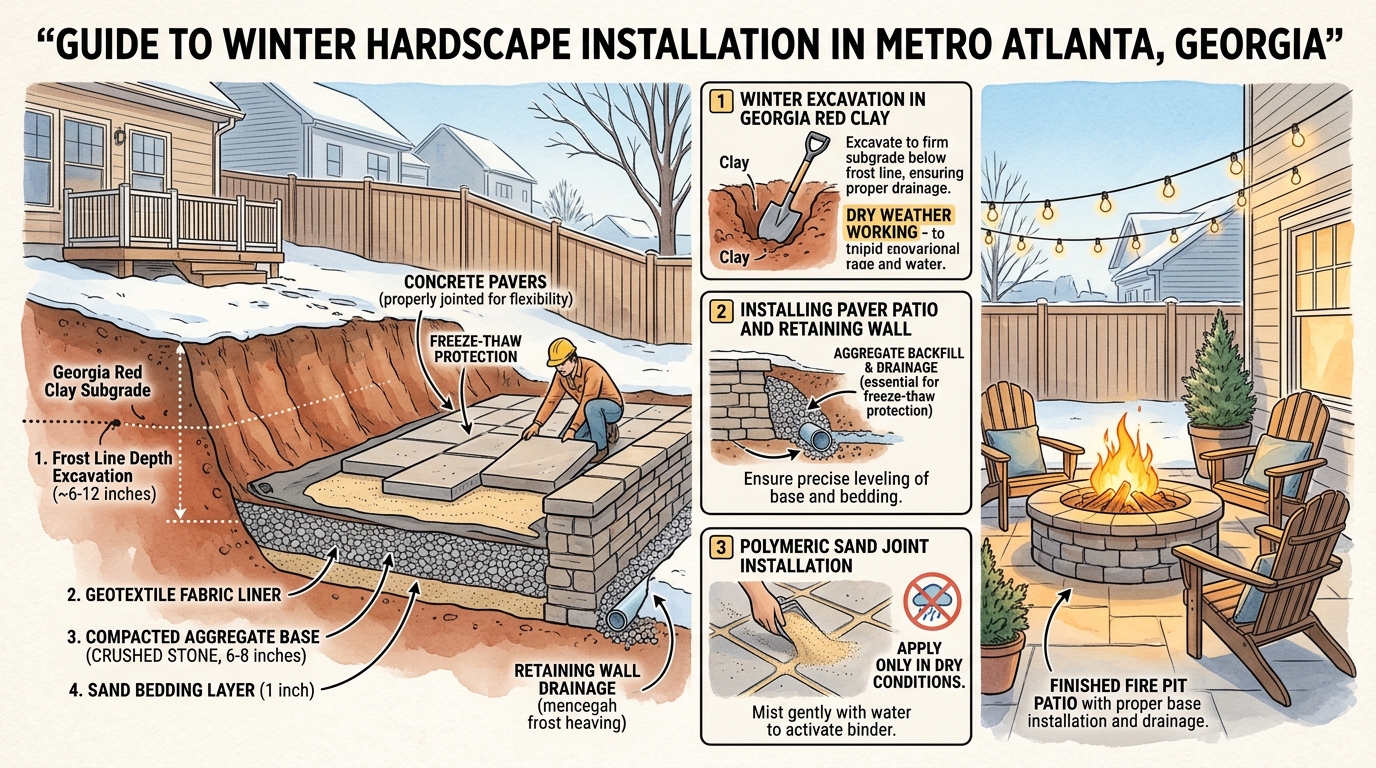
In northern states like New York, Ohio, or Illinois, winter ground freezes 36 to 48 inches deep, making excavation impossible until April thaw. Metro Atlanta, however, sits in USDA Hardiness Zone 7b/8a.
- Shallow Frost Depth: In Fulton, Gwinnett, and Cobb counties, the official frost line rarely penetrates more than 4 to 6 inches, and frost rarely lasts beyond 9:00 AM on sunny days.
- Mild Daytime Temperatures: Average winter high temperatures in Atlanta hover between 52°F and 58°F — ideal, comfortable working conditions for heavy masonry equipment and stone masons.
- Dry Winter Windows: While November and December bring occasional rain fronts, late autumn and mid-winter frequently provide extended runs of crisp, clear, sunny days with low humidity.
Contractor Insight
Excavation in cooler winter weather is actually cleaner than in humid July. The dense Piedmont clay is firm and manageable, and machinery operators can grade slopes with precision without tearing up sticky mud.
2. Pavers vs. Poured Concrete: Why Concrete Fails in Cold Weather
If you are considering a traditional poured concrete slab during winter, proceed with extreme caution. Poured concrete requires continuous moisture and warmth (minimum 50°F for several consecutive days) for the chemical hydration process to cure the cement paste.
If concrete freezes before reaching 500 psi strength, the water inside expands by 9%, breaking the crystalline bonds and permanently reducing compressive strength by up to 50%. This leads to surface scaling, spalling, and spider-web cracks.
| Factor | Poured Concrete Slab in Winter | Interlocking Pavers in Winter |
|---|---|---|
| Curing Requirement | Must stay 50°F+ for 5–7 days to cure | Zero curing needed — units arrive factory-cured |
| Risk of Freeze Damage | High risk of surface spalling & weak core | Zero freeze risk to high-density stone units |
| Immediate Usability | Must cure 24–48 hours before walking | Usable immediately upon placement and compaction |
| Thermal Movement | Rigid slab cracks during freeze-thaw cycles | Flexible sand joints absorb ground expansion |
| Winter Salt Resistance | Prone to pitting and scaling from ice melt | Engineered pavers withstand de-icing salts |
Because concrete pavers and natural travertine stones are produced under strict industrial factory steam controls, they arrive on your site with strengths exceeding 8,000 psi (compared to standard 3,000 psi poured concrete). Check our deep dive on pavers vs. concrete on Georgia red clay for long-term durability metrics.
3. Top 5 Reasons to Build Your Hardscape in Winter
1. Dormant Lawns Suffer Minimal Turf Damage
In summer, moving heavy wheelbarrows or compact track loaders across lush Bermuda or Zoysia grass causes visible compaction and yellow tire burn. In winter, warm-season grass roots are dormant. Ground protection mats spread the machine weight, and by spring green-up in April, the lawn recovers seamlessly.
2. Faster HOA Architectural (ARC) Approval
Homeowner association architectural committees are overwhelmed with submissions from March to June, often taking 4 to 6 weeks to respond. In November and January, ARC boards review applications in days. Review our guide to winning fast HOA approval in Metro Atlanta.
3. Avoid Spring Contractor Waitlists
High-end hardscape companies easily develop 8- to 12-week backlogs by April. Booking in winter allows you to hand-pick your ideal start date and enjoy personalized crew attention.
4. Lock in Pricing Before Annual Manufacturer Increases
Major hardscape manufacturers (Belgard, Tremron, Unilock) traditionally publish price adjustments of 3% to 7% every January. Signing your contract in late autumn locks in current material costs.
5. Enjoy Your Patio from Day One of Spring
If you start planning in April, permits, design, and construction push your completion date into late July heat. A winter build means your outdoor patio and outdoor kitchen are 100% finished for the very first warm weekend in March.
4. Cold-Weather Installation Rules AGS Stones Follows
While installing pavers in winter is standard practice across North Metro Atlanta, our master masonry crews adhere to strict cold-weather standards to ensure flawless results:
- Never Compact on Frozen Ground: If an overnight freeze frosts the top inch of soil, excavation waits until the morning sun thaws the surface. Aggregate base is compacted only into stable, unfrozen subgrade.
- Polymeric Sand Application Windows: Polymeric sand requires dry conditions and temperatures above 32°F to 40°F. We install and mist polymeric sand during sunny midday hours to ensure a rock-hard seal.
- Base Gravel Compaction: Crushed granite base stone (#21A crusher run) compacts cleanly in cold air because gravel density is purely mechanical and independent of temperature.
- Water Management & Slopes: We ensure all sub-base slopes pitch water away from the project to avoid freezing pockets beneath the pavers. See our comprehensive guide on fixing backyard drainage on Georgia red clay.
5. The Best Winter Hardscape Projects: Fire Pits & Seating Walls
Winter is the prime season to enjoy outdoor fire. A custom natural stone fireplace or circular paver fire pit instantly turns chilly 45°F evenings into cozy family gatherings.
Popular winter installations across Johns Creek and Roswell include:
- Built-in gas or wood-burning paver fire pits with circular curved seating walls.
- Floor-to-ceiling stone masonry outdoor fireplaces with raised hearths and timber mantels.
- Low-voltage LED step lights and under-cap hardscape lighting to brighten dark winter evenings.
- Covered pavilion foundations and integrated outdoor heaters.
Explore our masonry & fireplaces gallery to see real examples of Metro Atlanta outdoor living spaces built for year-round comfort.
Ready to Get Ahead of the Spring Rush?
Do not wait until the first 75-degree Saturday in April when every homeowner in Metro Atlanta starts calling contractors at the same time. Build this winter, protect your lawn, lock in current pricing, and be ready to entertain the moment warm weather arrives.
Our Duluth-based design team provides photorealistic 3D renderings and comprehensive estimates for homes in Alpharetta, Johns Creek, Roswell, Duluth, Atlanta, and across North Metro Atlanta.
Request your free on-site design consultation today or speak directly with our team at (678) 428-7630.
Common Questions from Homeowners
Can paver patios be installed during winter in Atlanta, GA?
+
Absolutely. North Metro Atlanta experiences relatively mild winters compared to northern states. Ground rarely freezes deeper than a few inches, and daytime highs routinely reach 50°F to 60°F. The aggregate base (crushed granite stone) and pavers themselves can be laid in cold weather without structural compromise.
Why are pavers better than poured concrete in cold weather?
+
Poured concrete relies on chemical hydration to cure. If temperatures drop below 40°F within the first 48 hours, wet concrete can freeze, causing surface spalling, flaking, and severe structural weakening. In contrast, interlocking concrete pavers and natural travertine tiles are manufactured and steam-cured in controlled factory conditions long before arriving at your property.
Is hardscape installation cheaper in the winter in Georgia?
+
While material quarry costs remain relatively steady, building in winter often saves homeowners money. Material suppliers frequently run end-of-year inventory incentives, and contractor schedules are more flexible than during the high-demand spring rush. Starting in winter also locks in current-year material pricing before annual manufacturer price increases take effect in January/February.
What happens to polymeric joint sand in the winter?
+
Polymeric sand requires completely dry paver surfaces and temperatures above 32°F (or 40°F depending on the brand binder) during installation and initial mist activation. Our crews monitor the forecast closely and install polymeric sand during dry, sunny midday hours, ensuring joints cure rock-hard without hazing.
How does winter construction affect my lawn and landscaping?
+
Winter is actually the safest time for your lawn. Warm-season Georgia grasses like Bermuda, Zoysia, and Centipede enter full winter dormancy. Foot traffic, wheelbarrows, and compact track loaders cause far less permanent root damage when the grass is dormant. By the time spring green-up arrives in April, your new hardscape is finished and your lawn rebounds vigorously.
Ready to Start Your Project?
Our in-house crews design and build driveways, patios, retaining walls and outdoor kitchens across North Metro Atlanta.
4579 Abbotts Bridge Rd Suite 10, Duluth, GA 30097 • Mon–Fri: 8:00 AM – 6:00 PM
Explore Services & Local Pages
Related Services
Service Areas
More Guides
- → Best Paver Patterns & Stone Materials for Driveways, Patios & Pool Decks in Metro Atlanta
- → How to Fix Backyard Drainage, Standing Water & Mud on Georgia Red Clay: French Drains, Swales & Hardscape Guide
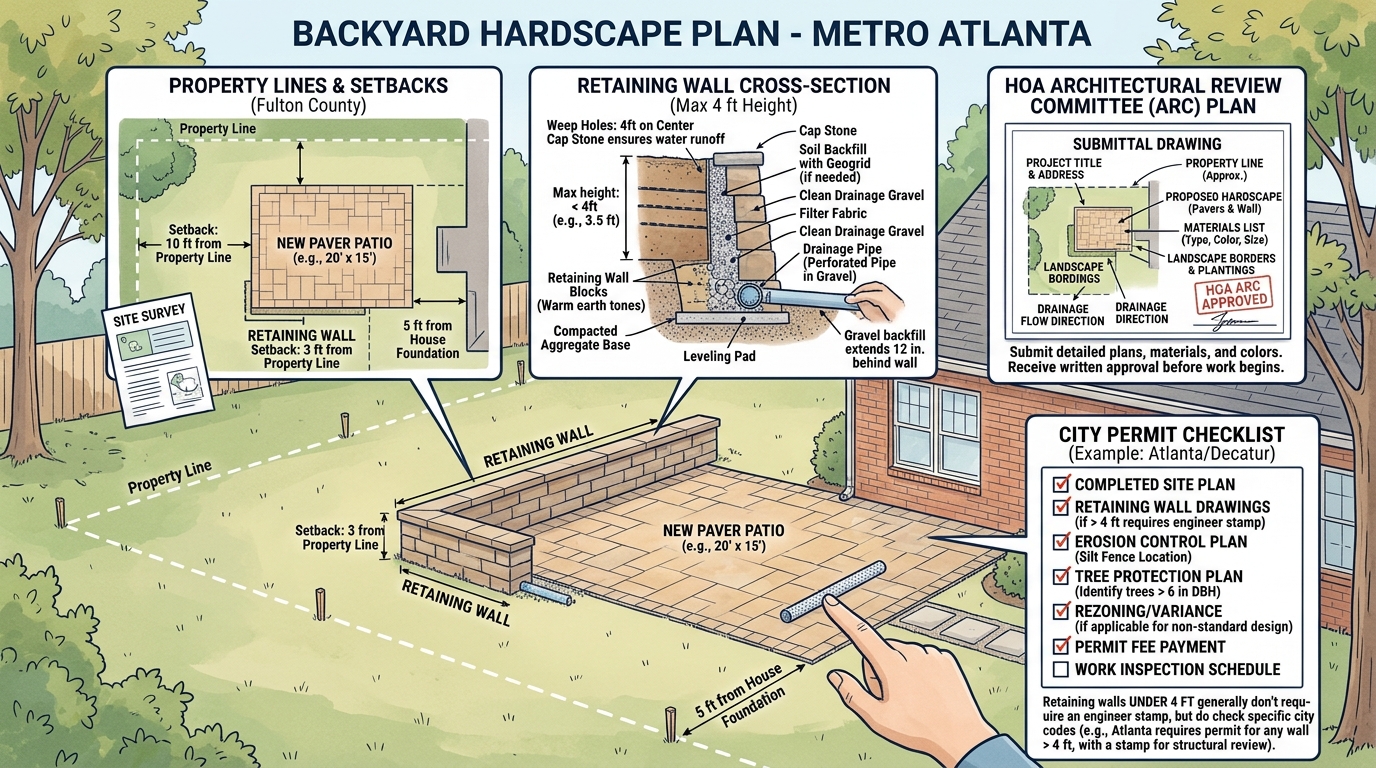
- → Do You Need a Permit for a Paver Patio, Retaining Wall or Driveway in Metro Atlanta? (City-by-City HOA & Code Guide)
- → How Much Do Pavers Cost in Atlanta? Patio, Driveway & Retaining Wall Pricing Guide
- → Pavers vs. Concrete Driveways in Georgia: Which Lasts Longer on Red Clay?
- → How to Clean and Seal Pavers: A Step-by-Step Maintenance Guide
- → Why Retaining Walls Fail in Georgia (and How to Build One That Lasts)
- → Travertine vs. Concrete Pavers for Pool Decks: Heat, Safety and Cost Compared
- → Planning an Outdoor Kitchen in Metro Atlanta: Layout, Materials and Budget
Related Guides
View All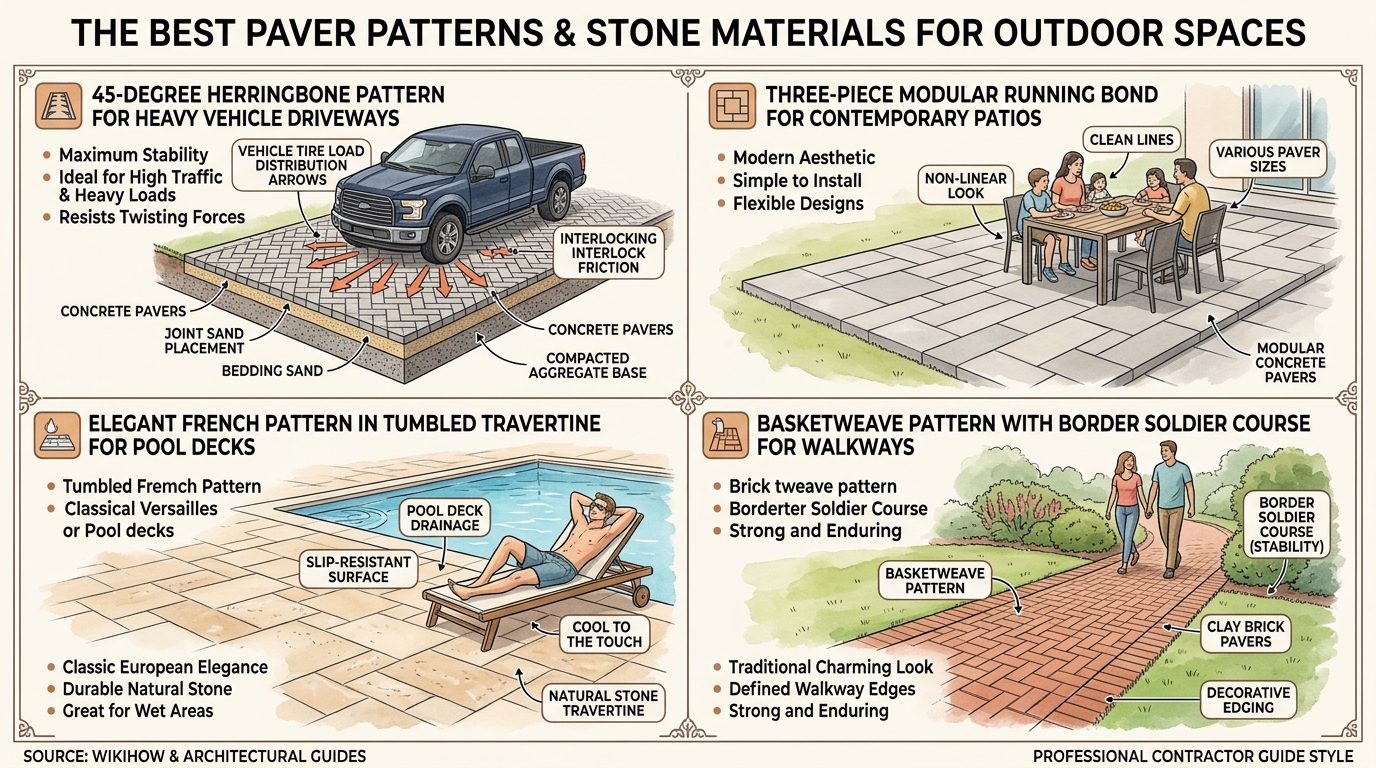
Best Paver Patterns & Stone Materials for Driveways, Patios & Pool Decks in Metro Atlanta
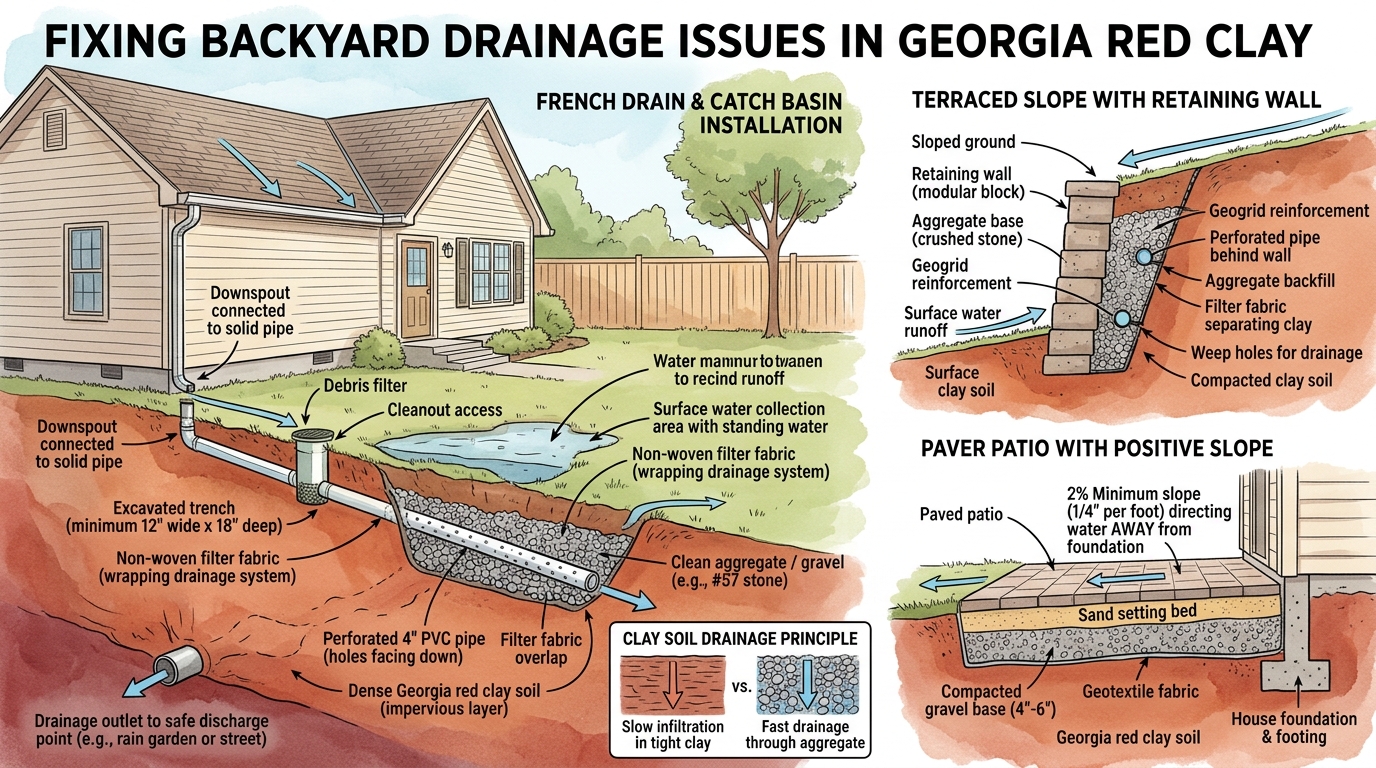
How to Fix Backyard Drainage, Standing Water & Mud on Georgia Red Clay: French Drains, Swales & Hardscape Guide